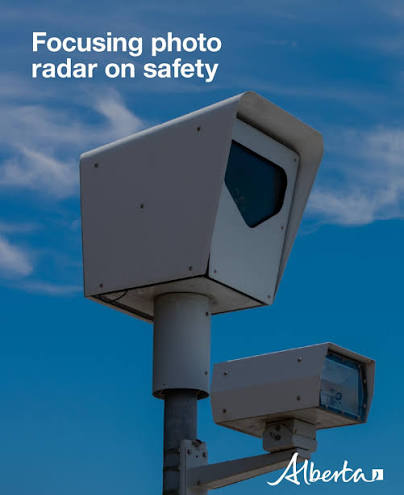
British Columbia is replacing all 140 of its Intersection Safety Cameras with modern equipment. The existing cameras will remain operational while the replacements are installed through spring 2027.
The announcement is a good opportunity to ask a question that is more important than how many tickets the cameras issue: do intersection safety cameras actually make us safer?
The evidence available so far suggests that they are changing driver behaviour.
British Columbia’s Intersection Safety Camera program has operated since 1999. All 140 camera locations enforce red-light violations, while 35 also enforce speeding. At a speed-enforcement location, a vehicle can be ticketed for exceeding the speed limit whether the traffic signal is red, yellow or green.
The province reports that red-light violations at the 140 camera locations have decreased 13% over the past five years. Repeat red-light violations have fallen 29%. At the 35 locations where speeding is enforced, the number of drivers travelling more than 25 km/h over the speed limit has decreased 52% over the past three years.
Those are substantial changes. Fewer people running red lights and fewer drivers travelling at extreme speeds should be good news for everyone using the intersection.
RoadSafetyBC also says the cameras have helped reduce serious crashes, including side-impact, head-on and pedestrian crashes. That is encouraging, although the government’s announcement does not provide the collision numbers or methodology behind that conclusion. It would be useful to see more of the evidence connecting reductions in dangerous driving behaviour with reductions in serious collisions.
The “tax grab” argument
Criticism of automated enforcement often focuses on money. An Intersection Safety Camera ticket is issued to the registered owner of the vehicle. The driver is not identified and, for most vehicle owners, no driver penalty points are assigned. Since September 1, 2018, the registered owner has also been unable to nominate another driver to take responsibility for the ticket.
There is a legitimate weakness here.
A driver who repeatedly runs red lights or speeds through camera-enforced intersections can potentially generate repeated fines without accumulating driver penalty points or having those offences placed on an individual driving record. If the fines can simply be paid, there is no driver-based sanction that necessarily becomes more serious with each offence.
That does not prove that the cameras are a tax grab. The province says net ticket revenue is returned to B.C. municipalities to support policing and public-safety programs. More importantly, the reduction in violations suggests that the cameras are having a deterrent effect.
But it is reasonable to ask whether owner-based enforcement is enough to deal with persistent dangerous drivers.
What about commercial vehicles?
Commercial vehicles raise another interesting question. British Columbia says that when the owner of a commercial vehicle is convicted of an Intersection Safety Camera offence, points are added to the carrier’s National Safety Code profile.
That gives a commercial-vehicle offence consequences beyond the fine. But tractor-trailers can involve different owners, operators and leased equipment. The publicly available information does not explain how the camera evidence is used in those circumstances, or how many camera convictions have actually resulted in National Safety Code points.
Those are questions worth answering, particularly if automated enforcement is expected to contribute to commercial-vehicle safety.
Do we need to identify the driver?
Automated enforcement does not necessarily have to identify every driver to be effective. If drivers know that an intersection is monitored and change their behaviour before they get there, the camera has accomplished its road-safety purpose without issuing a ticket.
On the other hand, a system that cannot identify the driver has fewer tools available when someone repeatedly commits offences. Other jurisdictions have chosen different approaches. For example, New South Wales requires companies to nominate the driver responsible for certain camera-detected offences and can penalize a company that fails to do so.
That doesn’t mean British Columbia should simply copy another jurisdiction. It does demonstrate that owner-based automated enforcement is not the only possible model.
What will the new cameras do?
The replacement cameras will have higher resolution and similar enforcement and data capabilities to the existing equipment.
We know that 105 existing cameras monitor red-light violations only and 35 monitor both red lights and speed. The replacement announcement does not say whether that arrangement will remain unchanged.
Nor should we assume that all 140 replacement cameras will issue speeding tickets. The announcement simply doesn’t tell us that. It will be interesting to see whether speed enforcement eventually expands to additional locations.
So, are they making us safer?
The evidence available today points toward yes.
Red-light violations are down. Repeat violations are down. At locations where speeding enforcement is in use, extreme speeding violations are down substantially. The province also says serious crashes have been reduced at camera locations.
That doesn’t mean the system is perfect. The inability to identify the driver limits the consequences for repeat offenders. And the success of the program should not be measured by how many tickets are issued or how much money is collected.
The real test is whether fewer people run red lights, fewer people travel at dangerous speeds and fewer people are killed or seriously injured in collisions.
Automated enforcement doesn’t have to be perfect to be useful. But if we are going to call it a road-safety program, we should keep asking the most important question: is it actually making our roads safer?Canonical URL:https://www.drivesmartbc.ca/automated-enforcement/do-intersection-safety-cameras-actually-make-us-safer