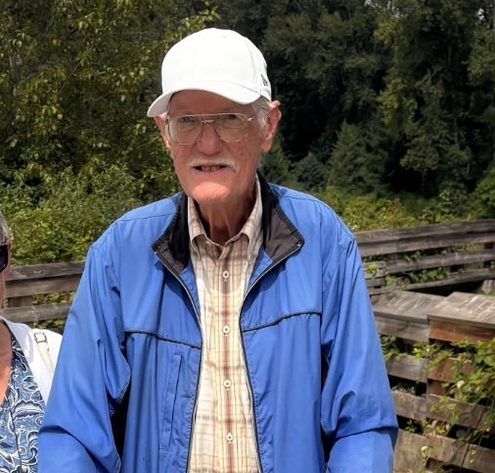
Chilliwack – Gary Raddysh is a former high school teacher at Chilliwack Secondary School and now in the running for Chilliwack Mayor.
The Municipal Elections are October 17.
There is very little in a social media footprint for the candidate.
There is an extensive 2024 comment from Build Chilliwack entitled Is there democracy at the municipal level in Chilliwack?:
” Is there democracy at the municipal level in Chilliwack? It’s a question that came up, once again, at the December 3rd City Council meeting during the annual review of the Financial Plan. Longtime Chilliwack resident Gary Raddysh, who has become a familiar voice at council meetings over the years, stood up to challenge the process. He argued that council lacks a true democratic mandate to increase taxes or make spending decisions, largely because voter turnout is so low—only 24% of eligible residents participated in the last municipal election.
Raddysh’s proposal was straightforward: freeze taxes, halt all new spending, and ensure that future financial decisions are backed by a majority of Chilliwack’s citizens. He suggested that any initiative, be it a tax increase or a new project, should only move forward if at least 50% of the community supports it. His frustration was palpable. How, he asked, could council truly represent the people of Chilliwack if less than a quarter of them even bothered to vote?
His concerns resonate with a broader theme of disillusionment that some citizens feel about local government—a sense that decisions are being made by a small group of elected officials without adequate community engagement. When Raddysh called for town halls or alleged that Engage Chilliwack was frequently censored, he wasn’t merely being difficult; he was voicing a real concern about the distance people often feel from those who govern them.
But Raddysh’s solution—that all spending decisions be subject to some kind of direct democracy—raises complex questions. Is it even practical to expect half of the community to weigh in on every spending decision? Would such a system actually strengthen our local democracy, or would it risk paralyzing decision-making, making it impossible to accomplish even the simplest of tasks? And most importantly, does low voter turnout mean that democracy isn’t functioning, or does it simply reflect a general contentment, as Mayor Popove suggested?
It’s easy to dismiss Mr. Raddysh’s demands as unrealistic. But his criticism—that our democracy feels more like a small group of insiders making decisions rather than a system by and for the people—shouldn’t be taken lightly. How can we get more people involved? And is the answer really in digital referendums and community surveys, or do we need to rethink the very structure of how we make decisions at the local level?
Do I Have a Representative? Understanding Chilliwack’s System
During Tuesday’s meeting, Mr. Raddysh asked repeatedly, “Who is my representative?” At first, it seemed rhetorical, but as he continued, it became clear he was genuinely seeking clarity. Was any one of the councilors his dedicated representative, similar to how an MLA or MP serves a defined constituency?
This moment highlighted a fundamental difference in how Chilliwack’s city council operates. Unlike the ward system used in many Canadian municipalities—where councilors represent specific neighbourhoods—Chilliwack uses an at-large system. In this model, all councilors represent the entire city rather than any one area. While this can encourage a more cohesive approach to city-wide decision-making, it can leave some residents feeling disconnected. Without a dedicated representative, who can they turn to when they have specific local concerns?
In a ward system, the city is divided into geographic areas, and each area elects its own councilor. This structure creates clear lines of accountability and ensures that every neighbourhood has a voice at the council table. Councilors in a ward system often develop a deep understanding of the unique challenges and priorities of their constituents, fostering closer connections between residents and their local government.
Chilliwack’s at-large model, on the other hand, assumes that all councilors will act in the best interest of the city as a whole. However, as Mr. Raddysh’s question revealed, this approach can leave some residents wondering if anyone is truly “their” representative.
Mayor Popove’s reaction to the question, and the following exchange clearly carried some tension, rooted in a misunderstanding of the at-large system. In this model, there’s no single representative for specific neighbourhoods, which can leave residents feeling uncertain about who, if anyone, is directly advocating for their local concerns.”