Abbotsford – Homelessness continues to be one of the most complex and challenging issues facing the City of Abbotsford, as well as communities across Canada. Over the past decade, the City has been working closely with BC Housing and other provincial government agencies, along with our local social service providers, to ensure people experiencing homelessness in our community have access to available shelter spaces or supportive housing options.
Despite these efforts, the number of individuals experiencing homelessness in our community continues to rise and many of the encampments located on private or provincially-owned properties have become entrenched.
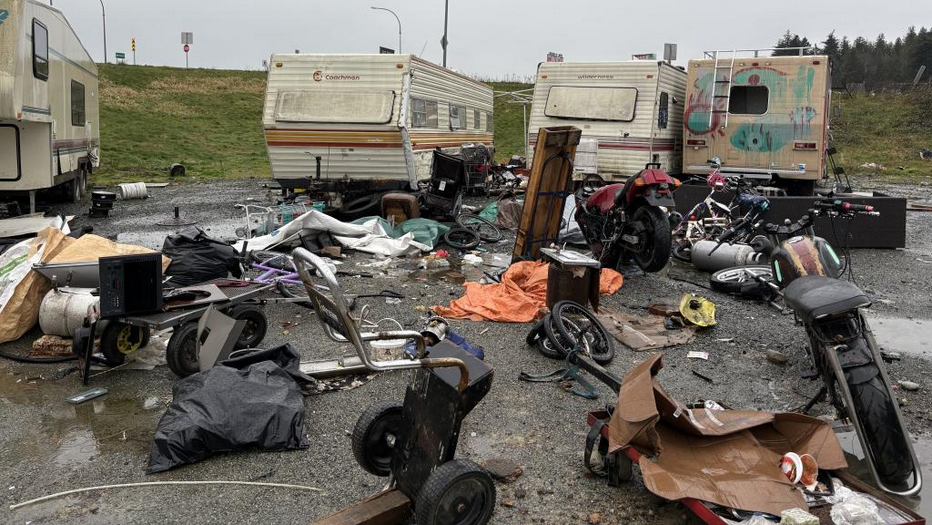
Homeless encampments are not a sustainable long-term housing solution. They are often unsafe and give rise to additional public safety, fire and sanitation challenges, placing considerable pressure on municipal and emergency services. Unfortunately, jurisdictional boundaries are one of the key factors that prevent the City from being able to address some of our most hazardous sites.
The encampments at Peardonville Road, the McCallum Road/King Road interchange, and the Whatcom Road park and ride/truck parking area, which sit along the Highway 1 corridor, are on provincially-owned lands managed by the BC Ministry of Transportation and Transit. Because these encampments are located on provincially-owned properties, the City’s bylaws do not apply on these lands and we don’t have authority to direct actions on the property or manage the encampments. This is why the City continues to advocate to the provincial and federal governments for additional collaboration, supports and action.
And we have not been passive. Recently, with the permission of the Ministry of Transportation and Transit, the City allocated $30,000 in federal Reaching Home grant funds to cleanup efforts at these encampments, removing more than 35,000 pounds of garbage over a two-week span. But we can’t do much more without the provincial government continuing to collaborate with us.
This week Minister of Transportation and Transit Mike Farnworth was in town to announce improvements coming to the Highway 11 interchange as part of the Highway 1 expansion project. During his visit, he met with Mayor Siemens to discuss homeless encampments on Ministry land and the City’s request for increased provincial leadership and collaboration toward timely encampment responses, including connecting the individuals with safe and stable housing options.
Also this week, we were very grateful to see that the Ministry of Transportation and Transit moved ahead with the closure of the Cole Road encampment located on their property, and the associated public safety concerns have now been addressed. In addition to the closure of the Cole Road site, the Ministry brought in machinery to remove a large amount of garbage from the Peardonville Road encampment, also located on their property, that was unable to be removed by individuals alone.
However, without timely action to address these remaining encampments, the negative effects will only continue to grow and worsen. Across all sites we’ve seen increased property crime and violence, including last month’s homicide and fires at the Whatcom Road site. There has also been a significant accumulation of waste and hazardous materials, with unsanitary conditions contributing to broader health risks.
Emergency call volumes at the encampments have remained high since 2023 and are continuing to accelerate, putting considerable strain on police and emergency resources. For example, McCallum almost reached its 2025 fire-related calls total within the first three months of 2026, while Peardonville is trending toward nearly tripling last year’s level.
The City knows that, as with previous successful encampment transitions, firm timelines for site clean-up and closures are a necessary part of addressing and closing encampments. Individuals living in encampments often decline available shelter or housing options, including rent supplements, until a clear closure timeline is established, as was evidenced at the recent Cole Road rest stop closure where we were advised that 30 individuals remained prior to notice of the closure. Once a closure date was provided, more than 20 people at the site accepted stable housing or shelter options offered to them.
The City knows that homelessness remains a complex issue facing communities across Canada. We also know it requires the cooperation of multiple levels of government as well as local agencies and service providers to address these challenges. With the proper amount of support from the provincial government, Abbotsford believes we would be able to close three of our most concerning encampments and offer safe housing options to the most vulnerable members of our community.
Abbotsford City Council