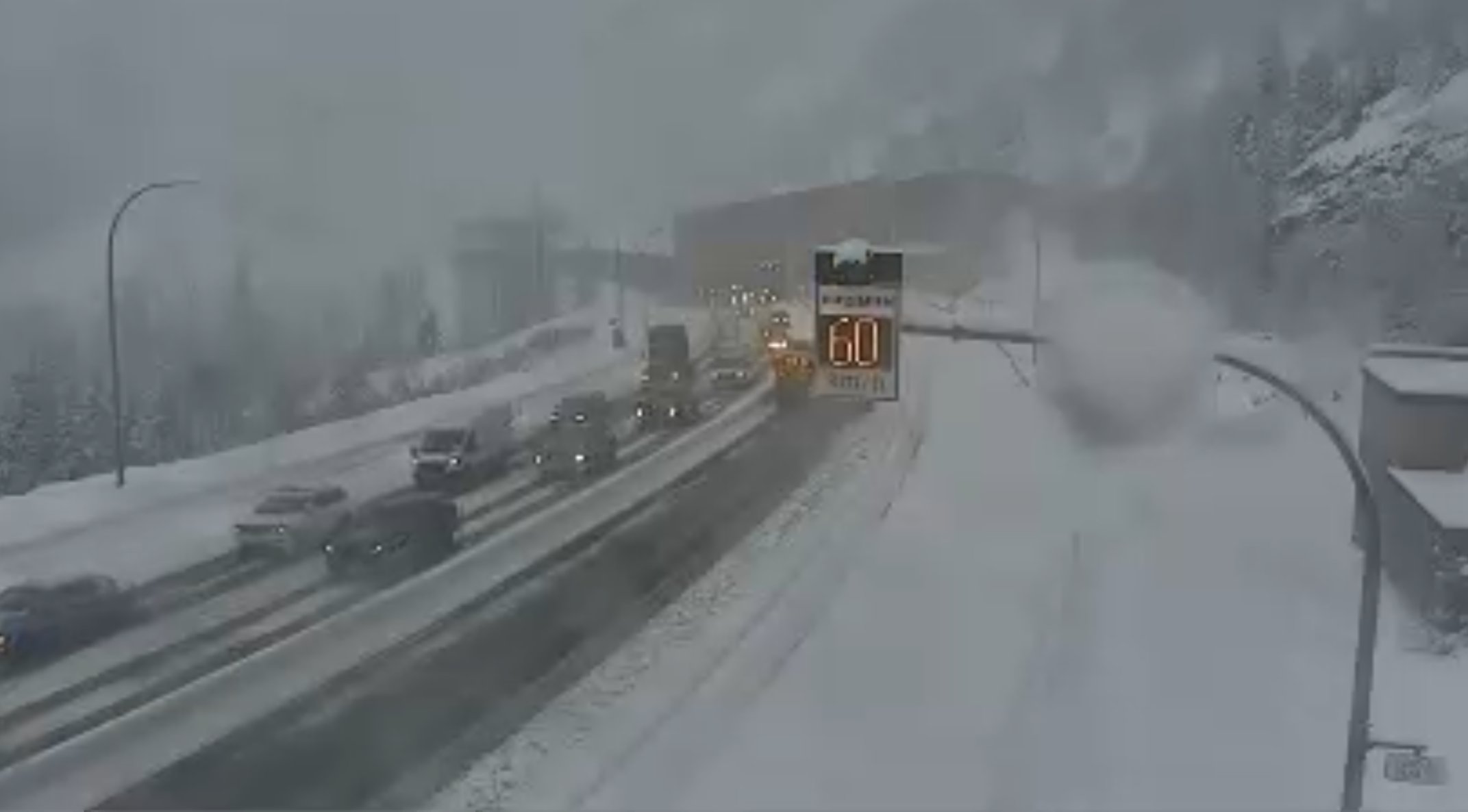
Travelling through one of British Columbia’s mountain passes requires more than checking the weather and allowing extra time. A serious collision, hazardous material spill, avalanche, landslide, washout or wildfire can close a highway for hours or even overnight. If traffic stops, you may have no access to food, water, fuel, charging facilities or shelter other than your own vehicle.
Preparation can make a prolonged delay safer.
Plan before you leave
Check DriveBC for highway conditions, closures and advisories. Check forecasts for the entire route, especially mountain passes and higher elevations. Avalanche control work can cause planned closures; natural avalanches and other incidents can close a road without warning.
Identify fuel stops, charging stations and communities. Consider alternatives, but do not assume they will remain open or be suitable. Allow extra time and consider postponing travel in severe weather.
Tell someone your route and expected arrival time. Charge your phone, but do not rely on it for emergency communication. Cellular coverage is absent or unreliable in some BC mountain and remote areas. Consider carrying a satellite communicator or satellite phone and learn how to use it before departure.
Prepare your vehicle
Check tires, brakes, battery and charging system, fluids, wipers, lights and defrosting. Make sure you have a spare tire and changing equipment or an appropriate repair kit. On most designated BC routes, winter tire or chain requirements apply from October 1 through April 30. On select highways outside mountain-pass and high-snowfall areas, the requirement ends March 31.
My personal rule for an internal combustion engine vehicle is never to let the fuel tank fall below half full. That provides a useful reserve if an unexpected delay or detour occurs.
Pack for a long wait
A routine breakdown kit may not be enough if you are stopped for six, eight or twelve hours. Carry warm clothing, extra socks, blankets or sleeping bags, hand and foot warmers, drinking water, ready-to-eat food, a first aid kit, necessary medications, a flashlight, reflective vest, warning triangles, a small shovel, traction material such as sand, a windshield scraper and snow brush, basic tools and a tow rope. Include a phone charging cable and portable power bank.
Pack for children, older passengers and pets. Keep essential supplies in the passenger compartment; you may not be able to safely reach the trunk while traffic is stopped.
When traffic stops
Be patient. Do not leave your vehicle to investigate, turn around, reverse along the highway or use an emergency access point unless directed to do so. Leave room for emergency vehicles and follow instructions from police, highway maintenance personnel and other responders. Monitor DriveBC when possible. A traffic delay alone is not a reason to call 911; use it for an immediate emergency requiring police, fire or ambulance assistance.
Whether to remain in your vehicle depends on the circumstances. If it is in a safe location, staying inside may provide the best protection from traffic and weather. Responders may instead direct you to evacuate. Follow their instructions. If you run an internal combustion engine for heat, make sure the exhaust outlet is clear of snow and exhaust cannot enter the passenger compartment. Never run the engine in an enclosed space.
Electric vehicle considerations
Cold weather reduces EV range. BC Hydro advises drivers to anticipate a reduction of approximately 20 to 40 percent in sub-zero conditions. Cabin heating and battery warming also use energy.
Begin the journey fully charged whenever practical, and recharge before entering a long stretch without reliable charging facilities. This provides an additional reserve if an unexpected highway closure or detour occurs. Check charging locations and availability before departure; a charger may be occupied, unavailable or inaccessible because of a closure.
During a prolonged stop, balance cabin heating against the energy needed to continue the trip. Heated seats and a heated steering wheel generally use less energy than heating the entire cabin. Warm clothing and blankets can help, but passenger comfort and safety come first. Learn how your vehicle manages climate control and its battery while stationary.
When the highway reopens
Traffic may be released in stages, and restrictions or further closures may follow. Obey traffic control personnel, leave space between vehicles and do not rush to make up lost time. Before continuing, reassess your fuel or battery reserve, supplies and the road conditions ahead.
Most trips through BC’s mountain passes are completed without a serious incident. Still, plan for more than the distance you expect to travel. Be prepared for the possibility that you may not move for several hours.
Canonical URL: https://www.drivesmartbc.ca/miscellaneous/mountain-pass-travel-are-you-prepared-be-stuck-highway
--
Tim Schewe
Road Safety Advocate
DriveSmartBC.ca