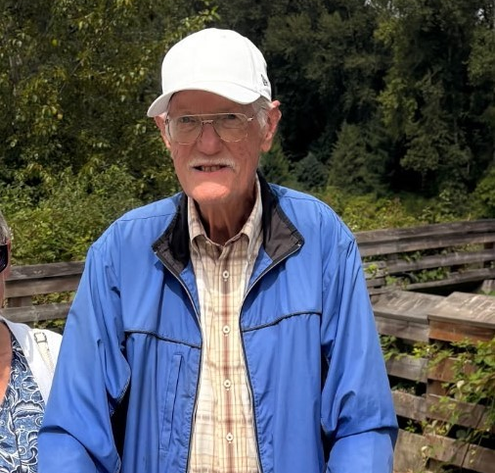
Abbotsford – Dave Loewen is a former (semi) retired Abbotsford City Councilor:
Each year, on November 11, we pause to remember and honour those who made the ultimate sacrifice in service to our country. Remembrance Day is a solemn occasion, shared in various forms by nations around the world, to acknowledge the terrible human cost of war.
But I hope our remembrance serves a purpose beyond honouring the fallen. It should also remind us of the horrors of war and strengthen our resolve to prevent future conflicts. Surely, one of the most meaningful ways to honour those who gave their lives is to redouble our efforts to become not only peacekeepers, but also peacemakers.
Since the Second World War, Canada has played a significant role on the world stage in both capacities. Our country has a history of contributing to international peace through diplomacy, institution-building, peacekeeping, and humanitarian initiatives.
In the years immediately following the Second World War, Canada helped shape international institutions intended to prevent another global conflict. Canada was a founding member of the United Nations in 1945 and the North Atlantic Treaty Organization (NATO) in 1949. Indeed, Article 2 of the NATO treaty is sometimes referred to as the “Canadian Article,” reflecting the influence of Canadian negotiators in ensuring that the alliance would promote political and economic cooperation, rather than serve solely as a military alliance.
One of Canada’s most significant contributions to international peace came during the Suez Crisis of 1956. When Britain, France, and Israel invaded Egypt, Canadian External Affairs Minister Lester B. Pearson proposed the creation of a United Nations Emergency Force to supervise the withdrawal of foreign troops and help stabilize the situation.
His initiative helped defuse a dangerous international confrontation and established a model for armed UN peacekeeping operations that would influence international conflict resolution for decades to come. For his efforts, Pearson received the Nobel Peace Prize in 1957, becoming the first Canadian to receive that distinction.
Over the following four decades and beyond, successive Canadian governments committed military personnel and resources to United Nations peacekeeping missions in the Congo, Cyprus, the Middle East, Cambodia, the Balkans, and elsewhere. In Cyprus alone, more than 25,000 Canadian Armed Forces members served over the decades, helping to maintain ceasefires and prevent renewed hostilities between communities.
These missions were not without sacrifice. Canadian peacekeepers faced danger, endured difficult conditions, and, in some cases, lost their lives in the service of peace. Their contributions remind us that maintaining peace can demand courage and sacrifice no less real than those required in war.
Canada’s contributions, however, have extended well beyond military peacekeeping.
In 1996 and 1997, Canada helped lead an international campaign to prohibit anti-personnel landmines, weapons that continued to kill and maim civilians long after conflicts had ended. Under Canadian leadership, this initiative culminated in the signing of the Ottawa Treaty in December 1997, when representatives of 122 countries gathered in Ottawa to sign an agreement prohibiting the use, production, stockpiling, and transfer of anti-personnel mines by participating states. The treaty also established obligations for mine clearance and assistance to victims.
That a middle power such as Canada could mobilize such broad international support for a humanitarian initiative remains a significant achievement in Canadian diplomacy.
Another important contribution came in 2000, when the Canadian government established the International Commission on Intervention and State Sovereignty. Its work led to the development of the principle known as the Responsibility to Protect.
At its heart was the conviction that governments have a responsibility to protect their populations from mass atrocities and that the international community also has responsibilities when governments fail to do so. In 2005, United Nations member states endorsed this principle, specifically addressing genocide, war crimes, ethnic cleansing, and crimes against humanity.
These examples illustrate that Canada’s contributions to peace have not been limited to military service. They have also involved diplomacy, international cooperation, humanitarian leadership, and the conviction that nations have a responsibility to seek peaceful solutions to conflict.
None of this is to suggest that Canada has always succeeded in its efforts, or that our record has been without shortcomings. Nor is it to suggest that peace can always be secured through diplomacy alone. The realities of international conflict are far more complicated. Nevertheless, these initiatives demonstrate what can be accomplished when nations make the pursuit of peace a deliberate priority.
As we gather on November 11 to remember those who gave their lives in war, we should also reflect on the responsibility their sacrifice places upon us.
Remembrance must be more than an annual ceremony. It should be a continuing commitment to the pursuit of peace, to resolving differences without resorting to violence, and to strengthening the international institutions and relationships that make peaceful coexistence possible.
Surely, the greatest tribute we can pay to those who died in war is to work toward a world in which future generations will not be called upon to make the same sacrifice.
To remember is to work for peace.
Dave Loewen, Former City Councilor, City of Abbotsford