Question: Do Intersection Safety Cameras improve road safety in British Columbia, or are they simply another way for governments to collect revenue?
Answer: Research from British Columbia and other jurisdictions indicates that automated enforcement reduces red-light violations, excessive speeding and serious intersection crashes. Whether the current system should do more to identify repeat offenders and hold them personally accountable is a separate public policy question.
What Are Intersection Safety Cameras?
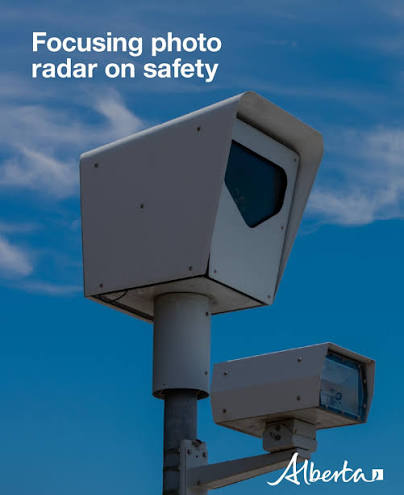
British Columbia’s Intersection Safety Camera Program uses automated cameras at selected high-risk intersections to detect vehicles that run red lights or exceed the posted speed limit in monitored locations.
These cameras are intended to improve safety by encouraging drivers to approach intersections at appropriate speeds and obey traffic signals. Unlike a police officer, however, the camera cannot normally identify who was driving the vehicle.
Do They Reduce Crashes?
The weight of the evidence suggests that they do reduce serious collisions.
Research conducted in British Columbia and internationally has consistently found reductions in red-light running, excessive speeding and serious right-angle collisions at intersections where automated enforcement is used. While no single safety measure eliminates crashes, intersection safety cameras have generally been shown to influence driver behaviour in a positive way.
Evidence from British Columbia
British Columbia has evaluated automated speed enforcement before. The province’s Photo Radar Program was independently studied to determine whether it influenced driver behaviour and improved road safety.
The evaluation also emphasized that public confidence is important to the success of an automated enforcement program. People are more likely to support the technology when they understand that the primary purpose is improving safety rather than generating revenue.
The results of that evaluation are available in the report Evaluation of the BC Automated Speed Enforcement Program.
Although today’s Intersection Safety Camera Program differs from the former Photo Radar Program, both are based on the same principle: encouraging drivers to slow down and obey traffic laws through automated enforcement.
What Does International Research Show?
British Columbia’s experience is consistent with findings from many other jurisdictions. Research from Great Britain, Australia and North America has generally concluded that automated enforcement reduces excessive speeds, red-light violations and the most serious intersection crashes.
“The findings are unambiguous. Cameras, historically, have saved lives. They continue to save lives. And should they be removed, speeds will rise and accidents with them.”
That conclusion, reached by Professor Richard Allsop following research in Great Britain, reflects a broad body of evidence showing that drivers modify their behaviour when they know automated enforcement is present.
The Debate: Safety or Revenue?
Critics often argue that Intersection Safety Cameras are little more than a revenue-generating tool because tickets are mailed to the registered owner and do not result in driver penalty points. Supporters counter that preventing even a small number of fatal or life-altering crashes justifies the program.
These positions are not necessarily incompatible. Automated enforcement may generate revenue because people continue to violate traffic laws, but the measure of success should be whether it improves safety. The important question is whether the overall benefit to public safety outweighs the costs and concerns associated with the program.
Improving the Program
The evidence strongly suggests that automated enforcement can improve road safety. The more useful discussion is how these programs should be designed to maximize safety while maintaining public confidence.
In my view, the strongest criticism of British Columbia’s current system is not that it generates revenue, but that it often cannot identify the person responsible for the offence. A driver who repeatedly speeds through camera-equipped intersections or runs red lights may simply pay a series of fines without any effect on their driving record.
If the objective is safer drivers rather than simply safer intersections, identifying repeat offenders and holding them personally accountable would strengthen the program. Financial penalties influence behaviour, but driver improvement measures such as penalty points, driver education and licence review are often more effective for habitual offenders.
Automated Enforcement Is Not the Entire Solution
Intersection Safety Cameras work best as one component of a broader road safety strategy. Police enforcement, engineering improvements, traffic signal timing, public education and responsible driver behaviour all play important roles in reducing collisions.
No single measure will eliminate crashes, but evidence suggests that automated enforcement contributes to safer intersections when combined with these other approaches.
Story URL: https://www.drivesmartbc.ca/intersection-safety-cameras-effectiveness
--
Tim Schewe
Road Safety Advocate
DriveSmartBC.ca