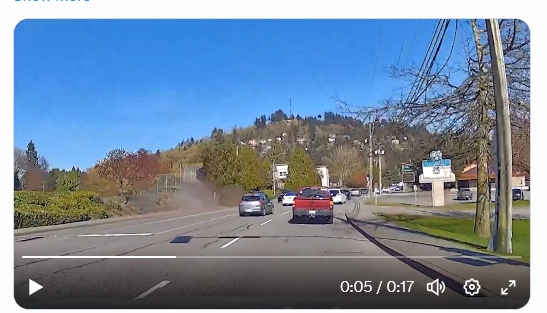

Do you wait for a situation to happen and then react to it when you drive? If so, mastering active hazard perception would be the most effective step that you could take to keep yourself safe on B.C.’s roads. Being proactive behind the wheel identifies potential threats before they become dangerous and helps you avoid being involved in a crash.
We all make mistakes despite our efforts not to. The key part of active hazard perception is creating a safe space bubble around you to give yourself the maximum reaction time to respond to mistakes. These could be your own mistakes as well as the mistakes made by drivers around you.
360 degree awareness involves keeping a mental map of all the road users that surround you. Looking 12 to 15 seconds ahead as you drive is supplemented by checking your mirrors every 5 to 8 seconds.
Left, centre, right and then left again is the 180 degree scan you must make before entering any intersection. Never trust the green light to grant you right of way!
Maintaining a safe following distance at all times is critical. Experts recommend maintaining a four second gap on the highway instead of 2 or 3 seconds.
Use the Scan-Predict-React Loop
- Scan: Continuously monitor your surroundings.
- Predict: Ask yourself, “What could happen next?” An example would be a ball in the road suggesting a child may follow.
- React: Be ready with an escape route or pre-emptive speed adjustment before the hazard fully develops.
Pointing and calling is a method used by the Japanese to combine visual observation, physical pointing gestures, and vocalized confirmation to maintain alertness and reduce human error.
Drivers point at traffic signs, signals, or speedometers while verbally stating the status. This has been proven to reduce errors by nearly 85 percent compared to the silent observation of everyday driving.
The technique engages multiple brain areas simultaneously (motor cortex, Broca’s area, and visual cortex), disrupting “auto-pilot” modes and forcing active engagement with critical safety information like speed limits, signals, and navigation changes.
Drivers can perform imagined pointing and calling while keeping both hands on the wheel by mentally visualizing the gesture and using their voice.
Story URL: https://www.drivesmartbc.ca/driver-training/active-hazard-perception-skills