
Surrey – The BC RCMP has delivered nearly half of the division’s body worn cameras to officers in British Columbia since the first cameras hit the streets in Mission on November 24, 2024.
As of February 2026, cameras have been deployed to officers at 90 of 185 detachments throughout the province with about 1,650 cameras now being used by frontline members.
The BC RCMP anticipates that deployment of the 3,600 cameras will be completed in the fall of 2027, making this one of the largest deployments of body worn cameras in the country.
“When we first began to roll-out the cameras we anticipated many benefits including improved police officer and public safety. The feedback from our frontline officers has been positive and they appreciate the cameras as a tool for de-escalation and for evidence gathering,” says Chief Superintendent Larry Montgomery.
Generally, when the public is informed that the camera is rolling, the interaction is calmer.
The Independent Investigations Office of British Columbia (IIO BC) investigates interactions between the police and the public that result in serious injury or death. Since deployment of the cameras, some IIO BC investigations have been cleared in a shorter time frame after footage is reviewed and revealed police interaction had not contributed to the injury or death.
Since deployment of the cameras, frontline officers are saying:
- Having body worn camera video shows the entirety of the interaction between officers and the public. Members are no longer as concerned with public recordings of them because the body worn camera video shows the interaction from 30 seconds prior to the officer activating the camera.
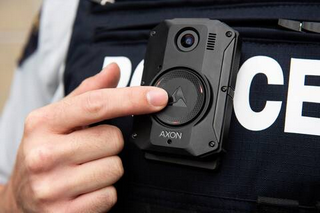
Frontline officers wear the cameras on the front of their vests. The camera is powered on during the entire shift in a buffering mode but must be activated by the officer to record audio and video. The camera automatically saves 30 seconds of video prior to activation by the officer. This gives a clear visual picture of what was happening leading up to the camera’s activation.
“While there’s positive feedback from the frontline, there are some challenges we are working through,” notes C/Supt. Montgomery.
Those challenges centre on disclosure obligations set by the BC Prosecution Service. All charges in BC are approved and laid by the BC Prosecution Service and within those parameters, police are required to provide a transcript of video submitted. This can increase administrative tasks for police officers. The British Columbia Association of Chiefs of Police Body Worn Camera Committee, on which the prosecution service sits, continue discussions with police focussing on a way to mitigate increased administrative tasks.
One way, police are addressing the issue is through the RCMP’s digital strategy. Currently, the BC RCMP is piloting Draft One which has AI capabilities that generates draft reports based on audio contained in body worn video. While AI is being utilized, there is still a human element to it in that it must be reviewed by members and then amended if required.
“We want to ensure there are guardrails in place when we utilize AI,” explains C/Supt. Montgomery. “This is in keeping with our larger digital and AI strategy that ensures that the human element is always looped in and aligns with established ethics and principles.”
The Draft One pilot project started in August 2025 and finished in January 2026 across eight detachments in BC with 380 potential users.
Early feedback suggests an opportunity for time-savings with every shift; however, a quantitative analysis is still in progress. There are approximately 800 reports that have been written with the assistance of the tool.
“The BC RCMP pilot sites will continue the usage of Draft One at this time until the RCMP reviews outputs from the quantitative analysis,” C/Supt. Montgomery noted.