
Fraser Valley – Misty Van Popta is the MLA for Langley-Walnut Grove and the Official Opposition Critic for Infrastructure:
Langley, the horse capital of B.C., could soon be facing an identity crisis if support for the equine industry further erodes. I say this as someone born and raised in the community and now as an elected official.
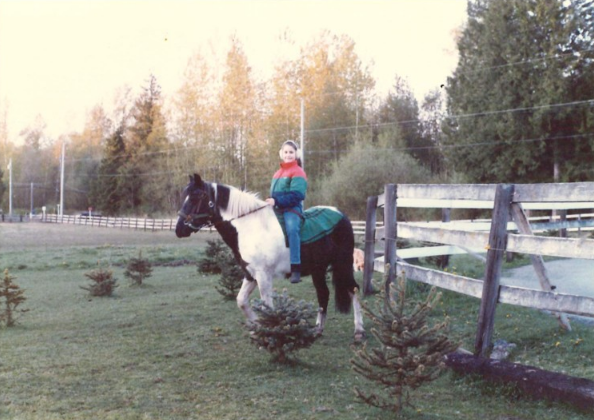
Coming from a modest past, my family was transplanted into a rural lifestyle without having any previous farm exposure. Like many young girls, I dreamt of having my own pony, and for a brief time, I was gifted with a stubborn, old, Welsh mix from a friend who had outgrown her. Her name, like mine, was Misty and with both the temperament and markings of a Holstein bull, she equally delighted and scared me. The two Mistys spent the summers of the 1980s riding the rural roads of Brookswood, wading in ponds on the way to the great trails of Campbell Valley Park. I knew nothing about caring for horses, but learnt from my neighbourhood friends; “Horse People” are a community unto themselves, who help each other out.
Fast forward 40 years, and Langley is one of the province’s fastest growing municipalities. Where I once rode bareback down, 16th Avenue is now an unofficial highway. Where there were once small farmsteads, there are now subdivisions. Don’t get me wrong, I’m a pragmatist who knows that change is a part of life. What it looked like where my parents grew up in the 1950s is gone, where I grew up in the 1980s will soon be a distant memory, and where my kids have grown up will be next. But the NDP government’s lack of understanding and exposure to rural communities and lifestyles has allowed for death by a thousand cuts to agriculture, the industries sustained by it, and the people who live on the urban/rural divide.
When the Ministry of Agriculture was one of the ministries in 2025 to receive funding cuts, are decisions like that rooted in their lack of understanding of what makes B.C., B.C.? Very few NDP MLAs live in rural areas, which leaves a gap in the government’s appreciation of the very industry that feeds us and employs thousands of British Columbians. When I sit in the Chamber every day, the faces reflected to me on the other side of the aisle are not blue-collar workers and farmers like most of my Conservative colleagues are. It’s the urban/rural divide even in the Legislature.
The NDP’s forced densification creates a scenario where it’s more equitable to convert small farmsteads into multimillion dollar parcels, instead of providing support to municipalities and developers to focus on urbanized locations on transit routes with amenities. We absolutely want housing, but we need it where it makes sense and where the affordability is. But now we have policies that remove local decision-making capabilities and centralize it in Victoria where politicians vote based on housing ideology, instead of practicability and local needs.
For some, horses are a hobby, but for many, horses are their livelihood. Racing alone adds 111 million dollars economic impact to British Columbia and is now at risk. The unexpected closure of both Fraser Downs and Hastings Racecourse left thoroughbred breeders shipping horses to the U.S., left racers fleeing for Alberta, and left thousands of British Columbians without work. The NDP pulling the casino funds from Hastings without warning was not only cruel, but suspicious, considering the new soccer stadium announcement a few days later, on that same land.
Grants to agriculturally based family events like the Valley West Stampede are almost non-existent anymore. When times are tough for families to find fun and affordable things to do, a $10 ticket to a day of rodeo fun is a breath of fresh air. But as corporate sponsorships also feel the economic squeeze, when does the expectation of government support to community endeavours fit in? The Minister of Finance routinely admits that the provincial cupboards are bare in B.C., but it seems that there’s always enough money for another government consultant somewhere, while the first to go without is anything agriculturally relevant.
We must elect people who are willing to support and balance today’s pressures with our culture. Growth doesn’t have to mean erasing who we are. Langley can build homes, support families, and still protect the agricultural and equine roots that define our community. But that requires a government that understands rural life, values local decision-making, and sees agriculture not as an inconvenience, but as a cornerstone of B.C.’s identity. If we don’t stand up for it now, we may see our cowboys and cowgirls riding off into the sunset.